

Table of Contents
TogglePrefix and Suffix Activities: How to Boost Vocabulary Without a Textbook
You don’t need another complicated curriculum; you need just a few smart prefix and suffix activities that actually work.
Teaching prefixes and suffixes doesn’t have to feel like “one more thing” on your plate. In fact, the right activities can transform how your students read, spell, and write without hours of prep.
Why Prefix and Suffix Instruction Matters
When students understand common prefixes and suffixes, they can decode unfamiliar words, spell more accurately, and expand their vocabulary naturally. Research shows that strong vocabulary skills lead to higher test scores and less struggle across every subject.
The problem? Many curriculums ignore prefixes and suffixes or only touch on them lightly.
The solution? Four simple strategies to supercharge your word study. You can be ready to use these games, graphic organizers, and real world practice ideas in your classroom tomorrow.
1. Add Reference Materials to Your Word Study
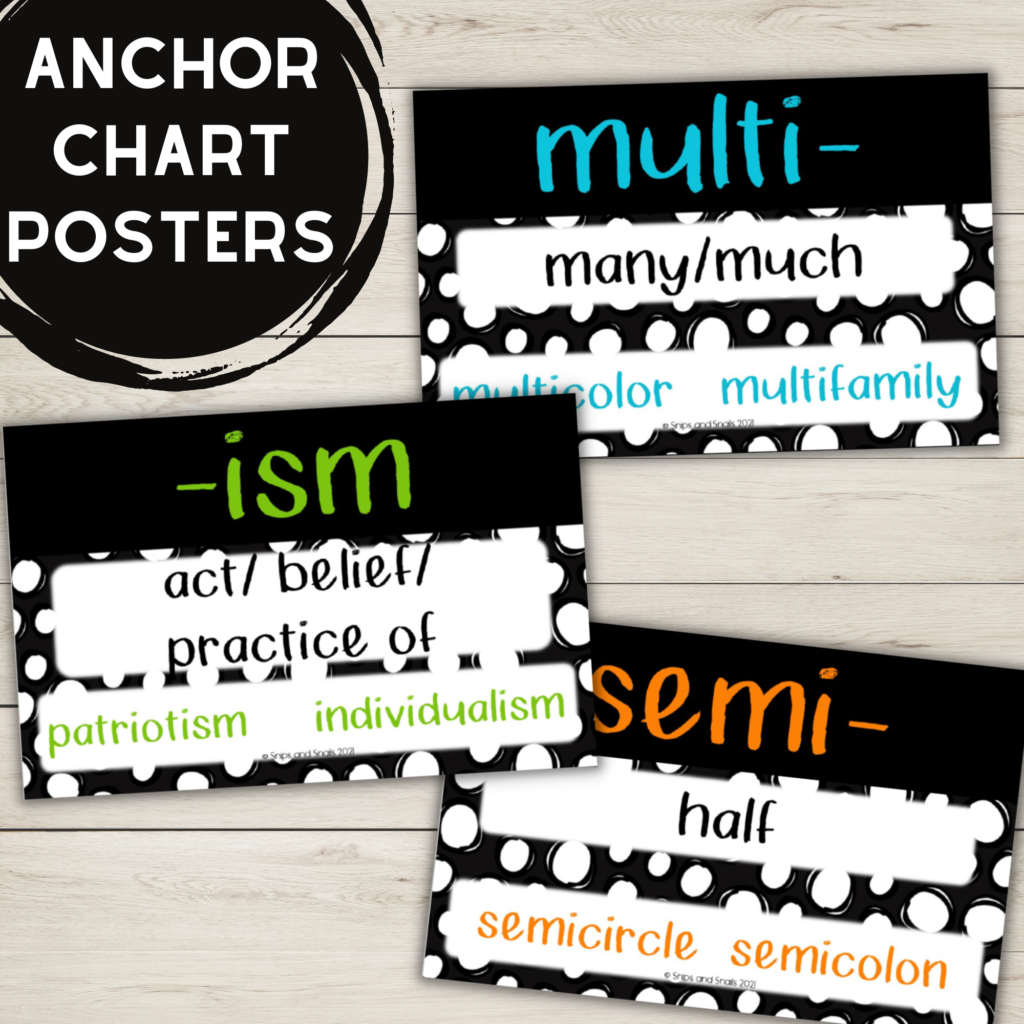
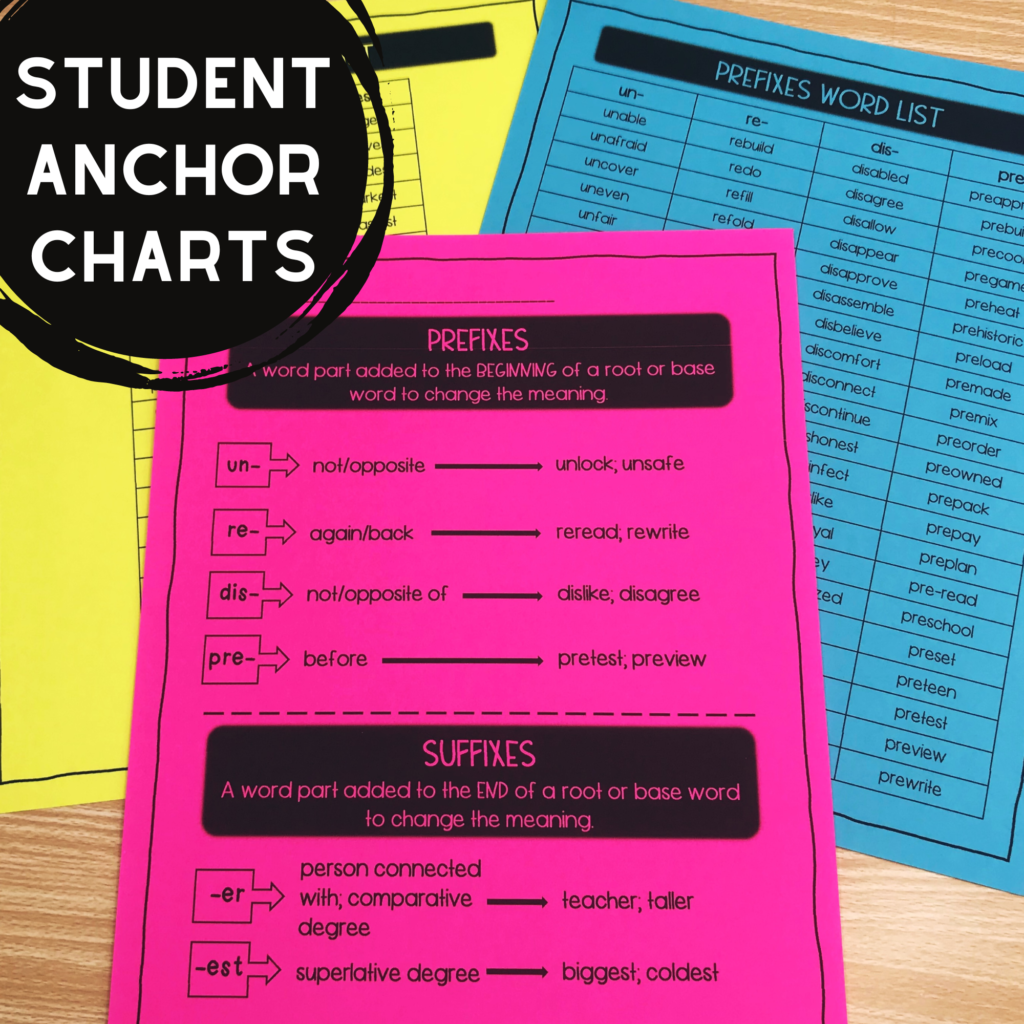
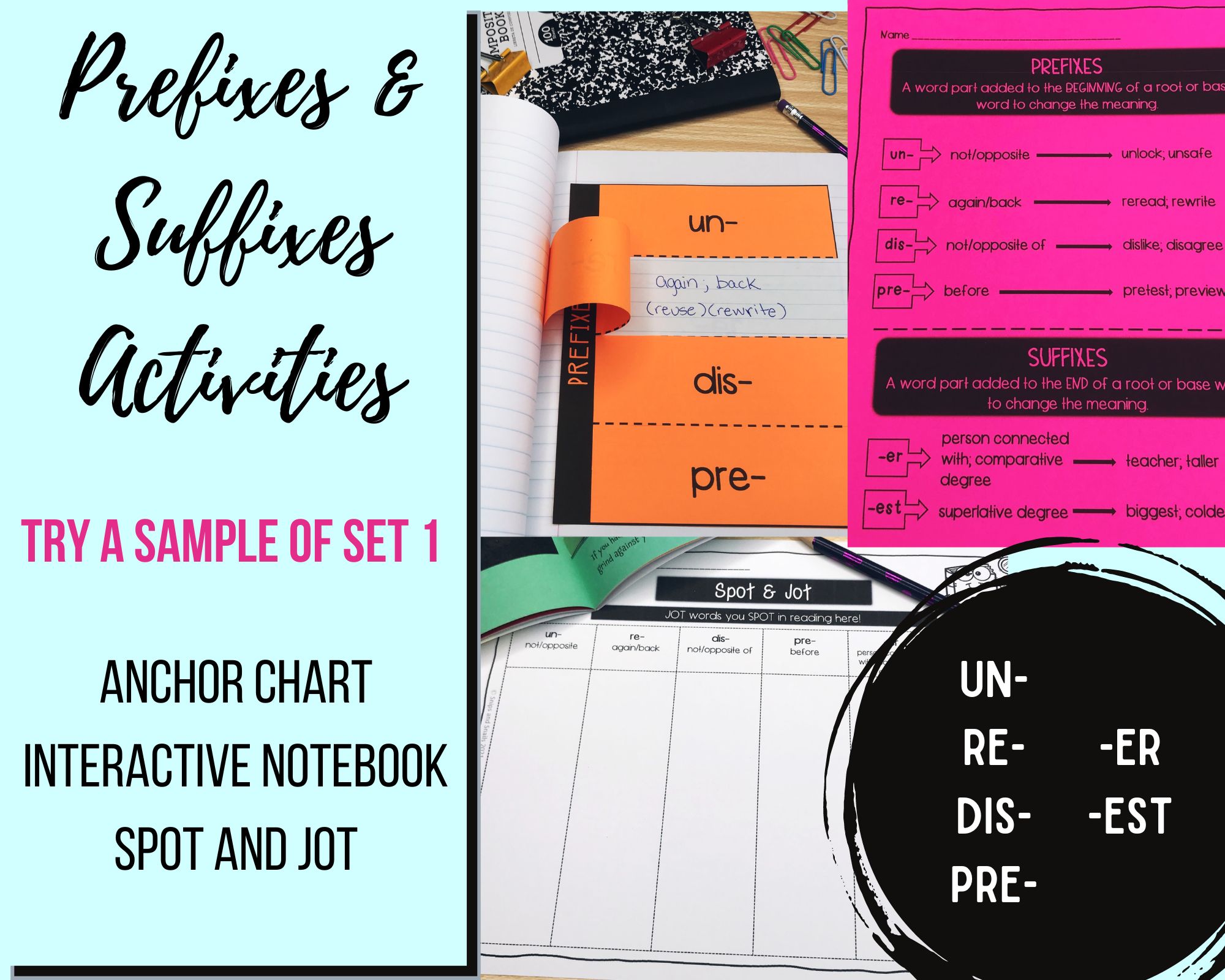
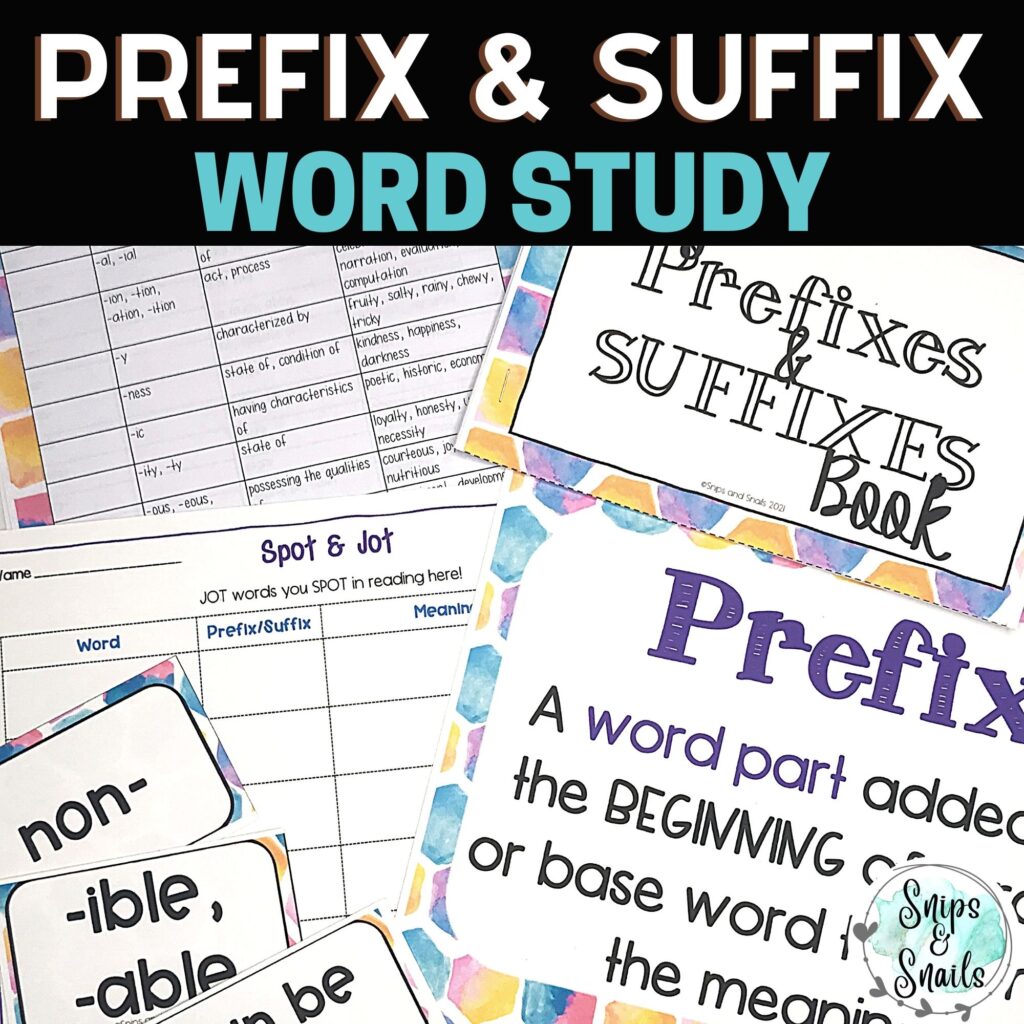
One quick way to help students with their studies is to provide prefix and suffix reference sheets and anchor charts. These are effective tools to enhance learning and help students retain information.
- Wall posters keep the information visible, and students can easily refer to them while working on activities in class.
- Reference charts designed for students to keep in their notebooks or binders are excellent study guides for tests and can be used by students who need extra support when working in centers or playing word games.
Keep reading to see some examples of prefix and suffix activities and games these can be used with.
2. Use Graphic Organizers to Boost Retention
When you add in graphic organizers, you benefits students at all levels of learning. Plan to include them as part of your prefix and suffix activities to boost student engagement and retention of the content.
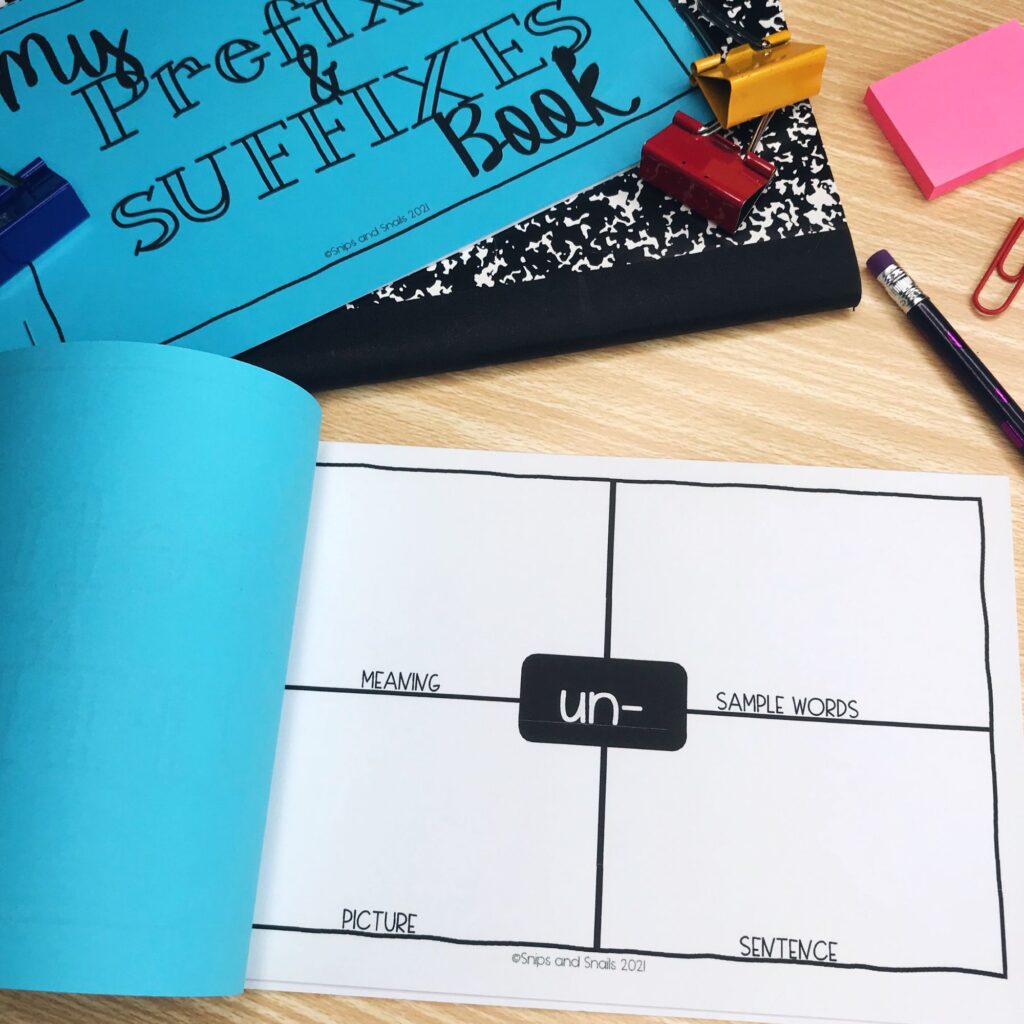
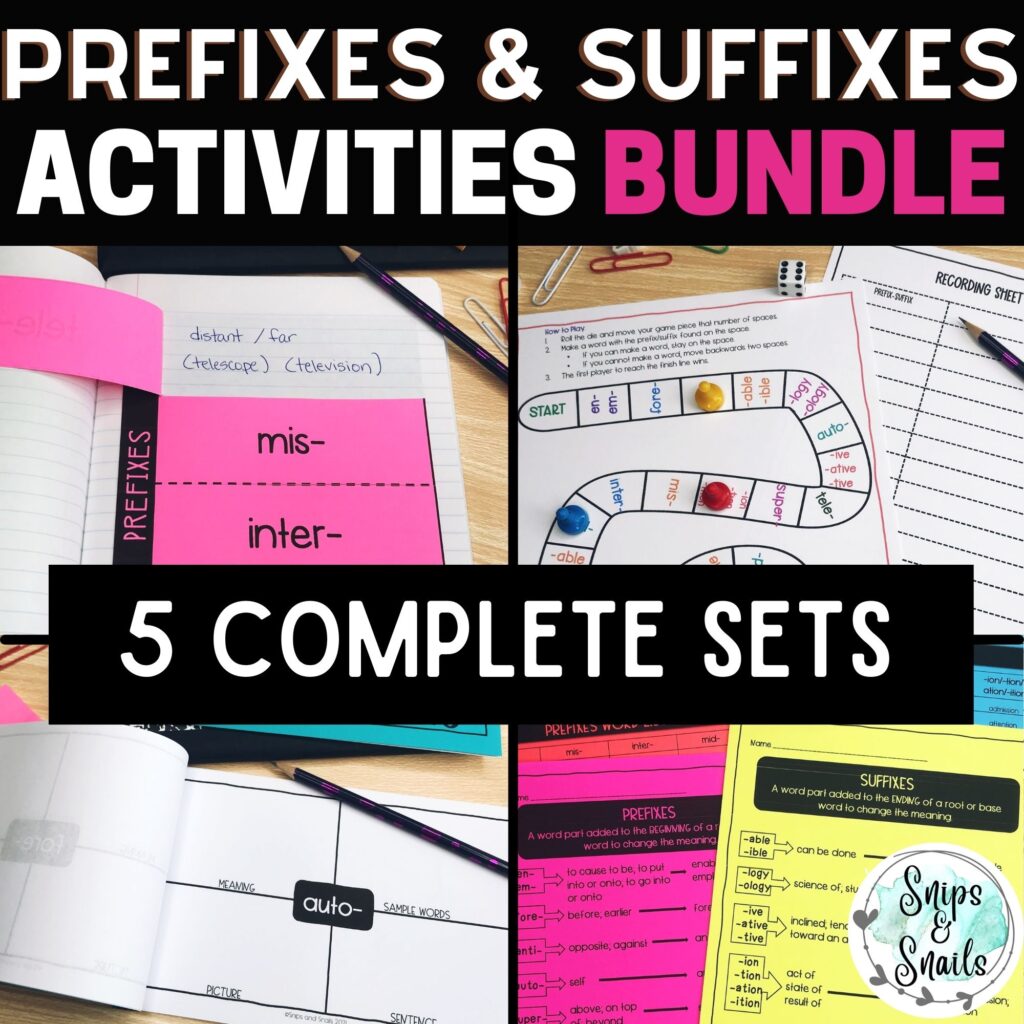
- The Frayer Model is a highly effective vocabulary tool that you can modify for the study of affixes. In this adapted version, students complete the four squares with the meaning, sample words, a picture representation, and a sentence using prefix/suffix with a base word in context.
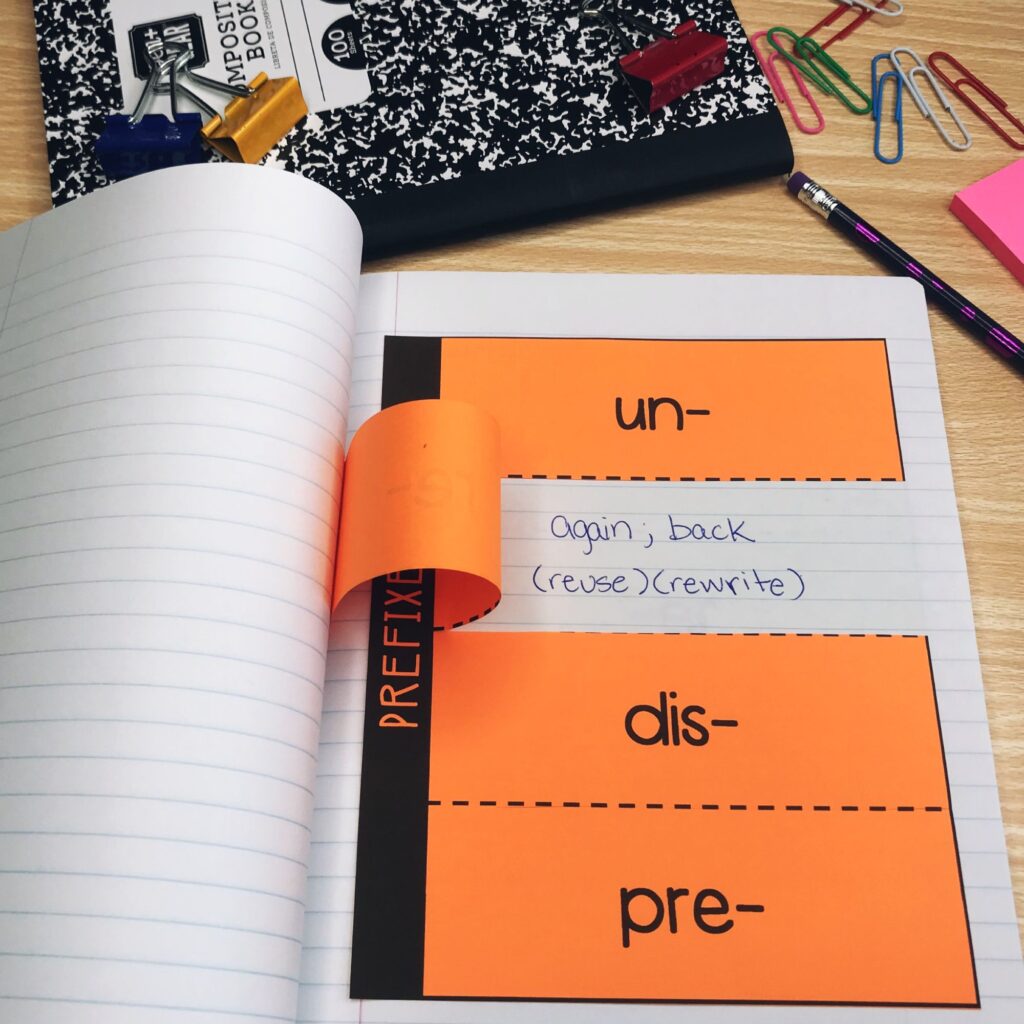
- Interactive Notebooks can be used in endless ways in your classroom. One way to use it with prefixes and suffixes it to incorporate a simple flap design to give students another tool to study with. They can write definitions, synonyms, antonyms, and/or examples under the flaps. These are a great way for students to review and self-assess their understanding. Try this one in the freebie.
3. Try Games and Real-World Activities
The right activities can make learning really come to life! When students are engaged, they more easily retain the content. Prefix and Suffix activities that use games and authentic text help to hook learners–and keep them hooked!
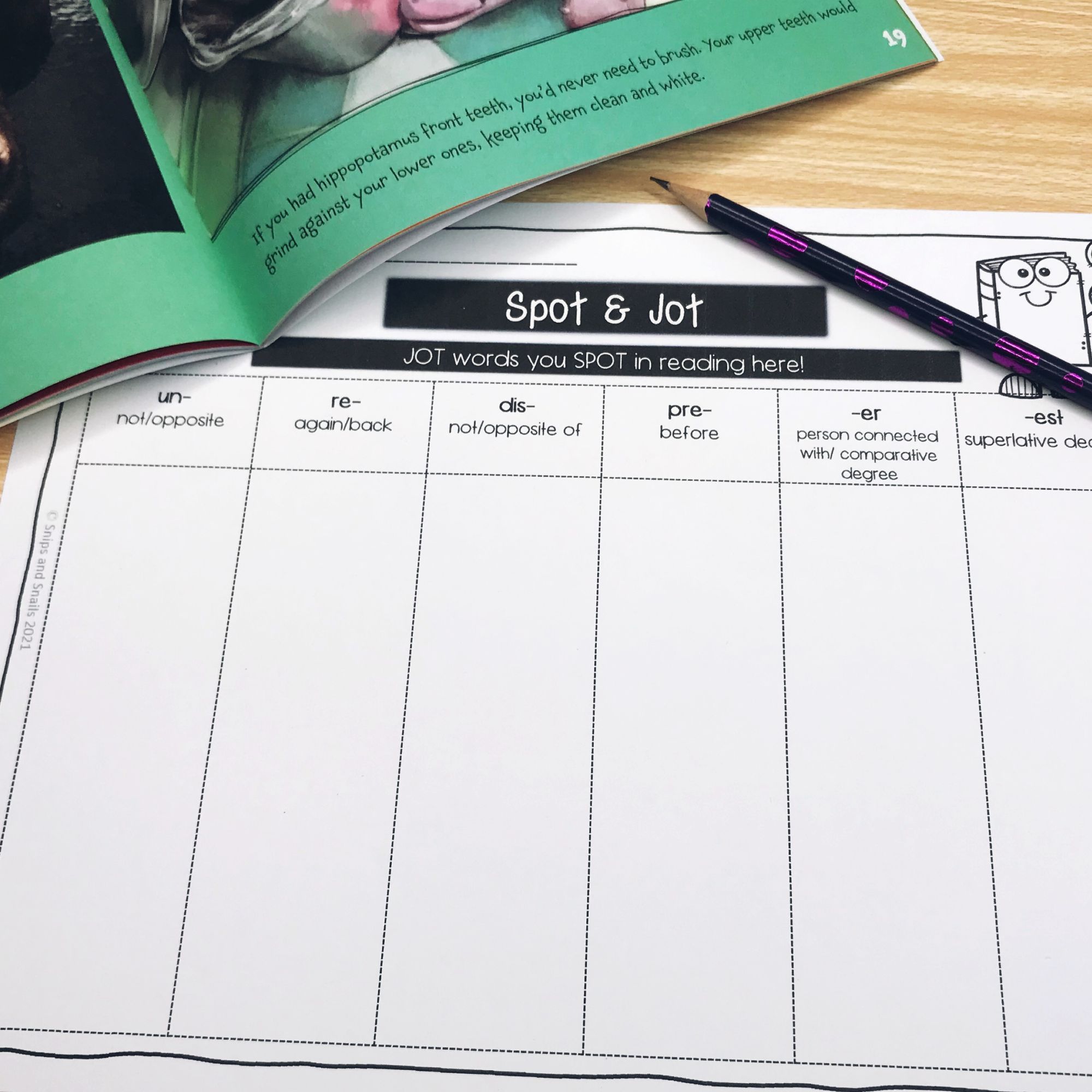
Spot and Jot Activity
This activity gives students the opportunity find prefixes and suffixes in the real world. The more students pay attention to the language in their environment, the more meaningful the study of affixes becomes.
Have students conduct a scavenger hunt for words to add to their chart. You can use trade books, textbooks, and even newspapers and magazines. Try it out in the freebie!
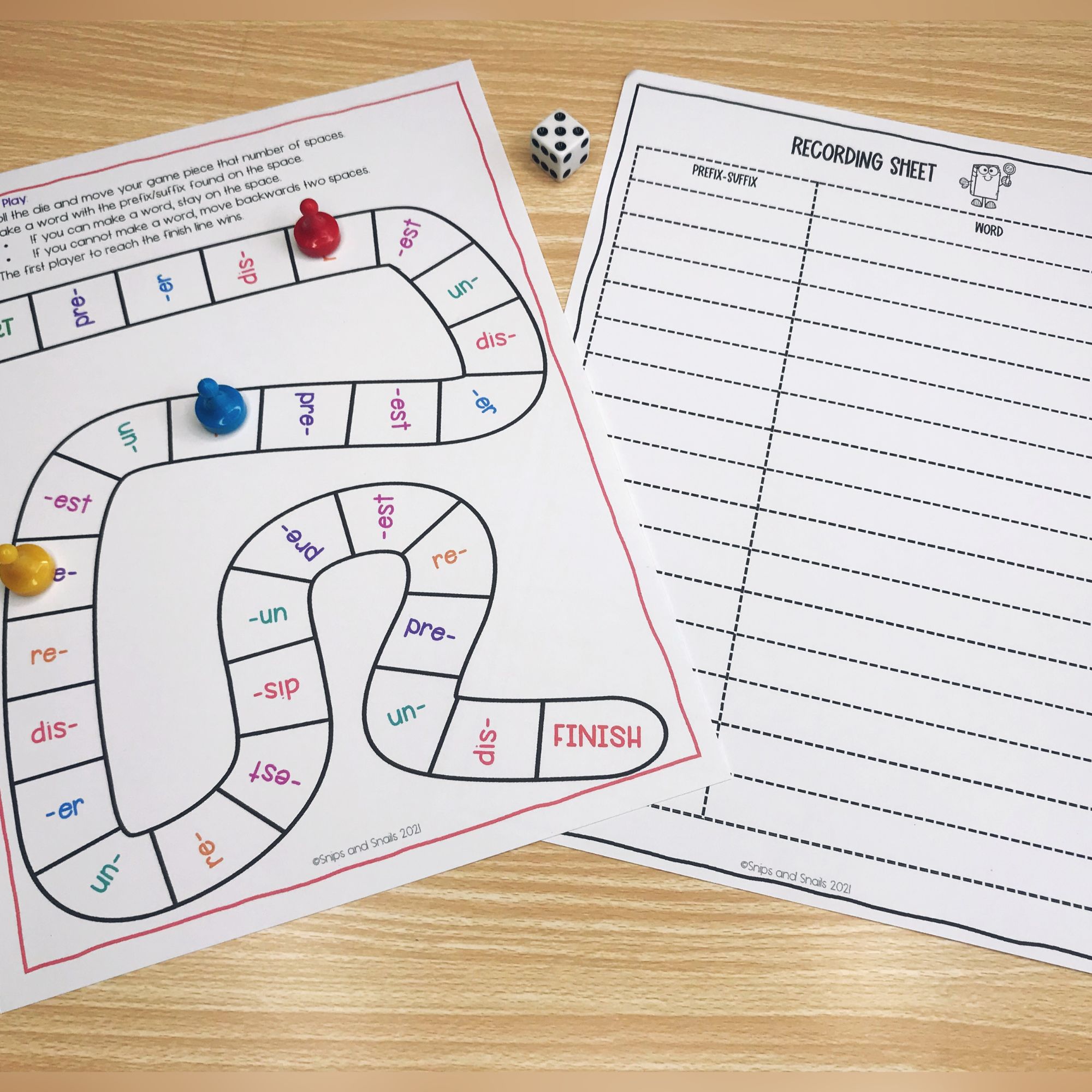
Prefix and Suffix Board Games
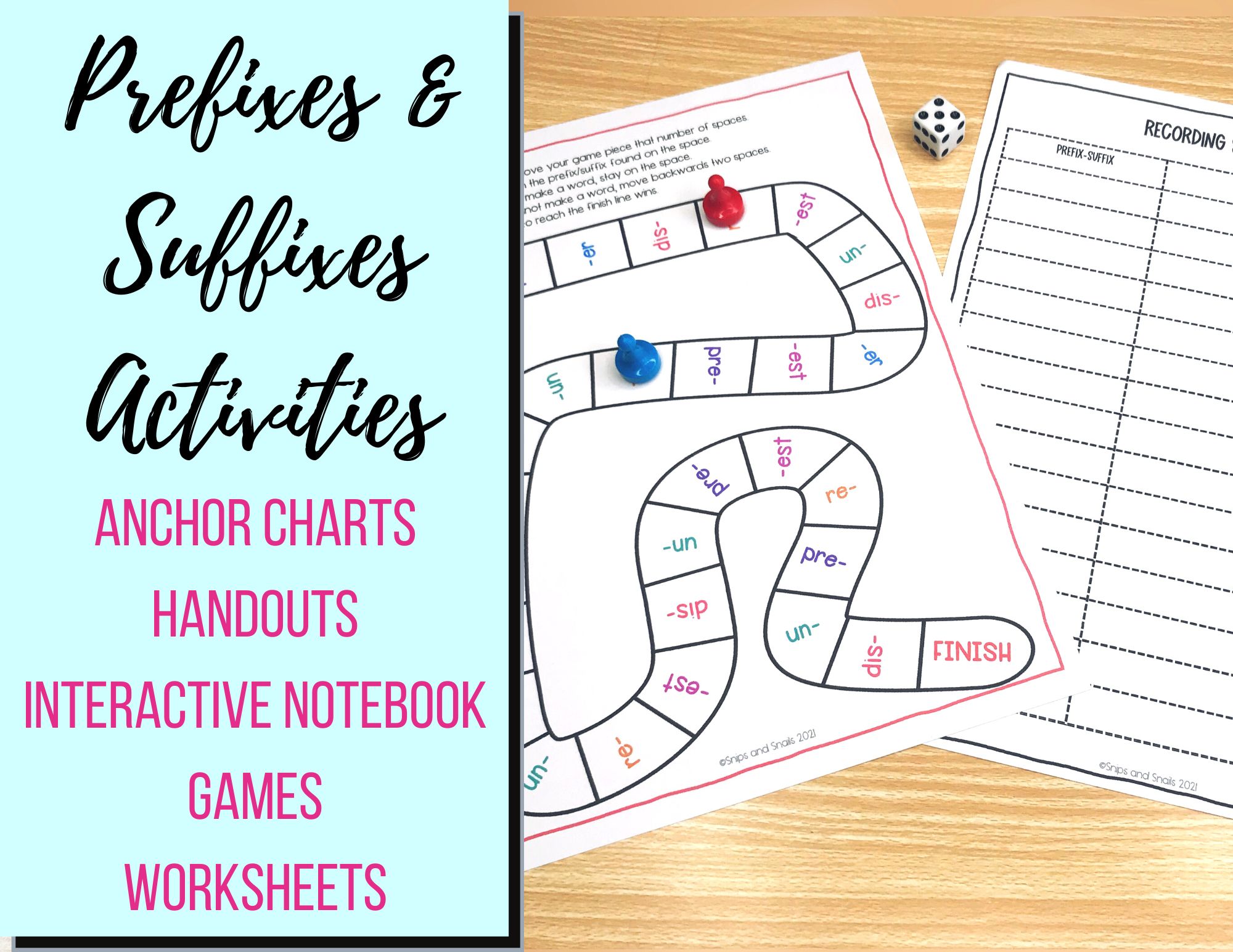
Students never turn down a chance to play games in the classroom, and this prefix-suffix activity is no exception. Games like this one create challenge and collaborative opportunities, and are adaptable to different learning levels.
Create a game board with the affixes listed in the squares. As students land on a square, they must come up with a word that correctly uses the prefix or suffix. They can’t repeat one of their words (or another students’), so as the game progresses, the challenge can increase.
Do you have students who aren’t quite ready for that challenge? Adapt the rules to meet their needs.
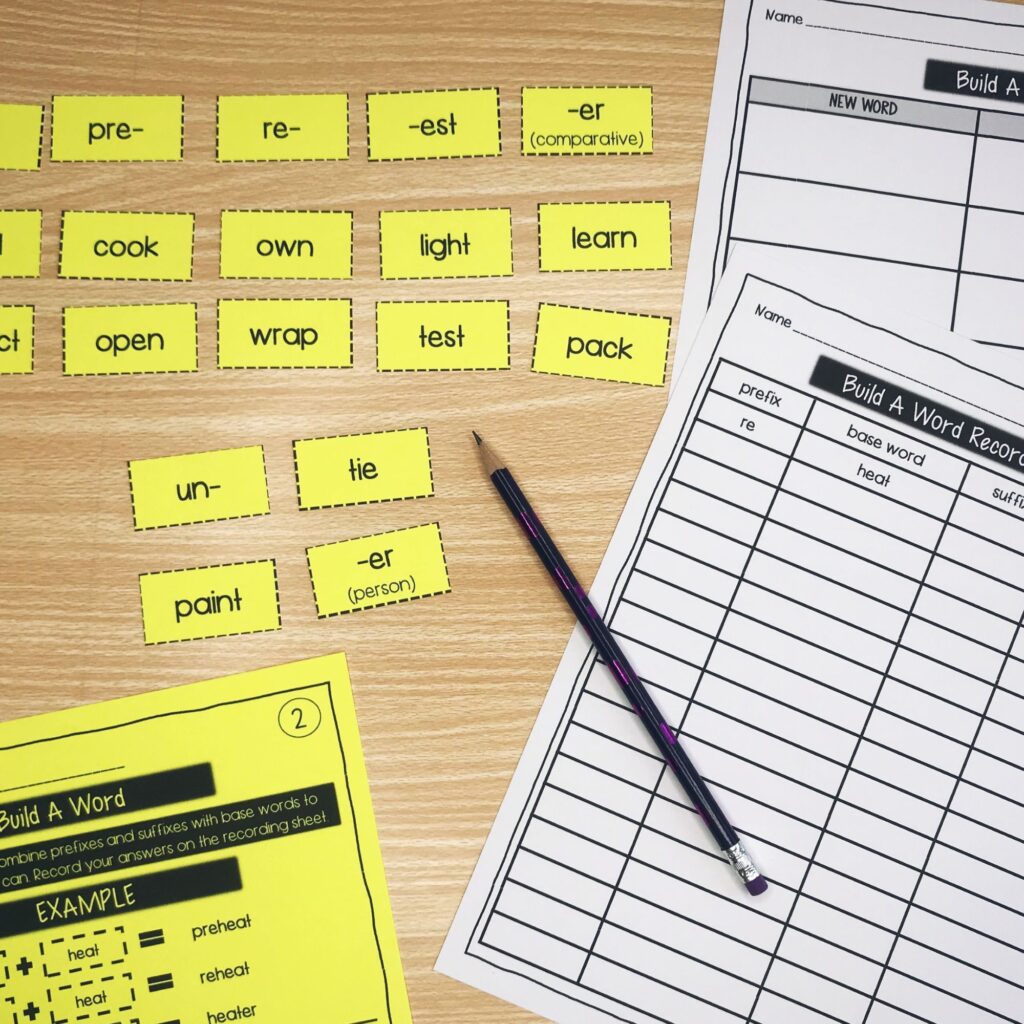
Build-a-Word Activity
this activity is excellent for letting students ‘play’ with word parts. Students not only see how the meaning of base words change with the addition of affixes, but they also recognize how the parts of speech can change, too.
Create a collection of base words and affixes for students to put together. As the students form new words, they can record their findings on paper.
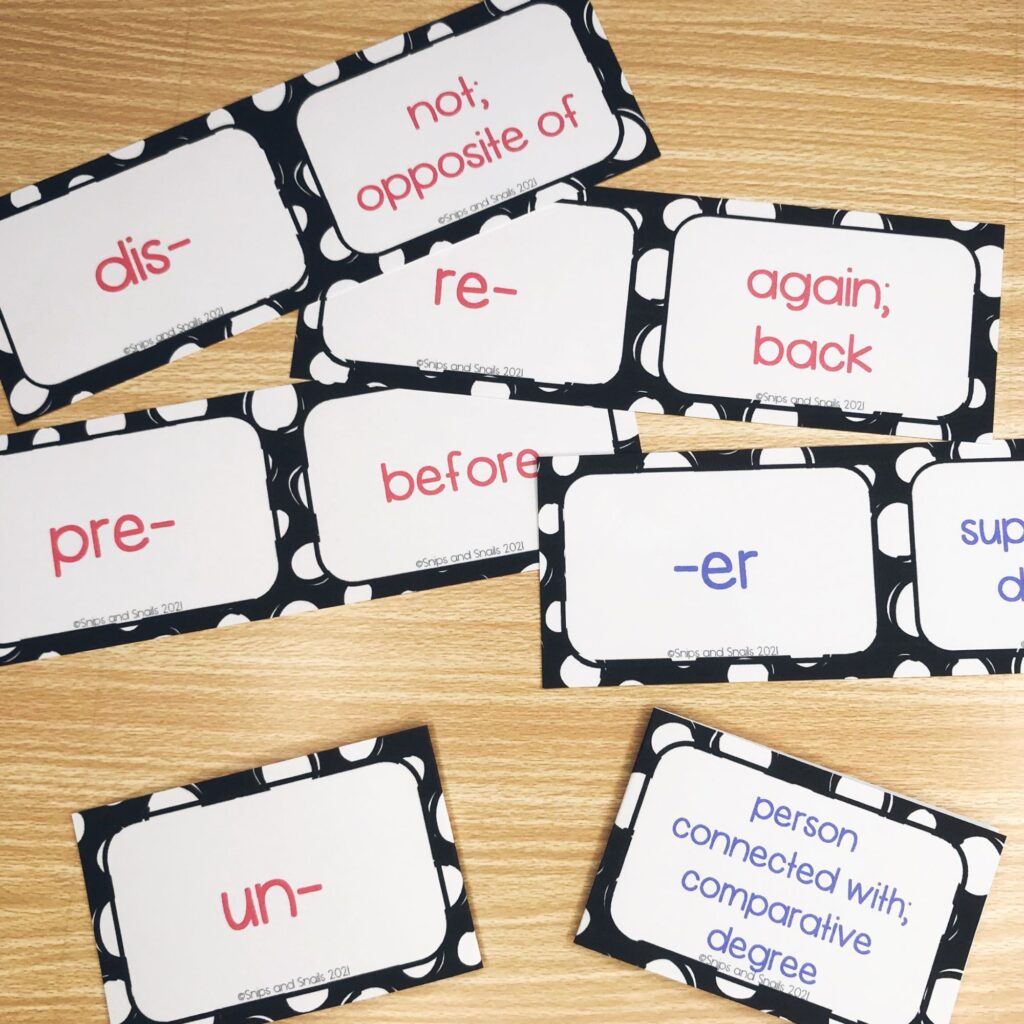
Flashcards
While this affix activity may seem basic on the surface, flashcards can be highly effective in a learning environment.
You can have students make a traditional set of cards with the term on one side and the meaning on the back. These types of cards are perfect for independent study.
A second option is to have one card for the term, one card for the meaning, then use the cards for matching and memory games. Your students can play these independently, with partners, and the cards can be made part of a center for quick reviews.
4. Provide Lots of Practice Opportunities
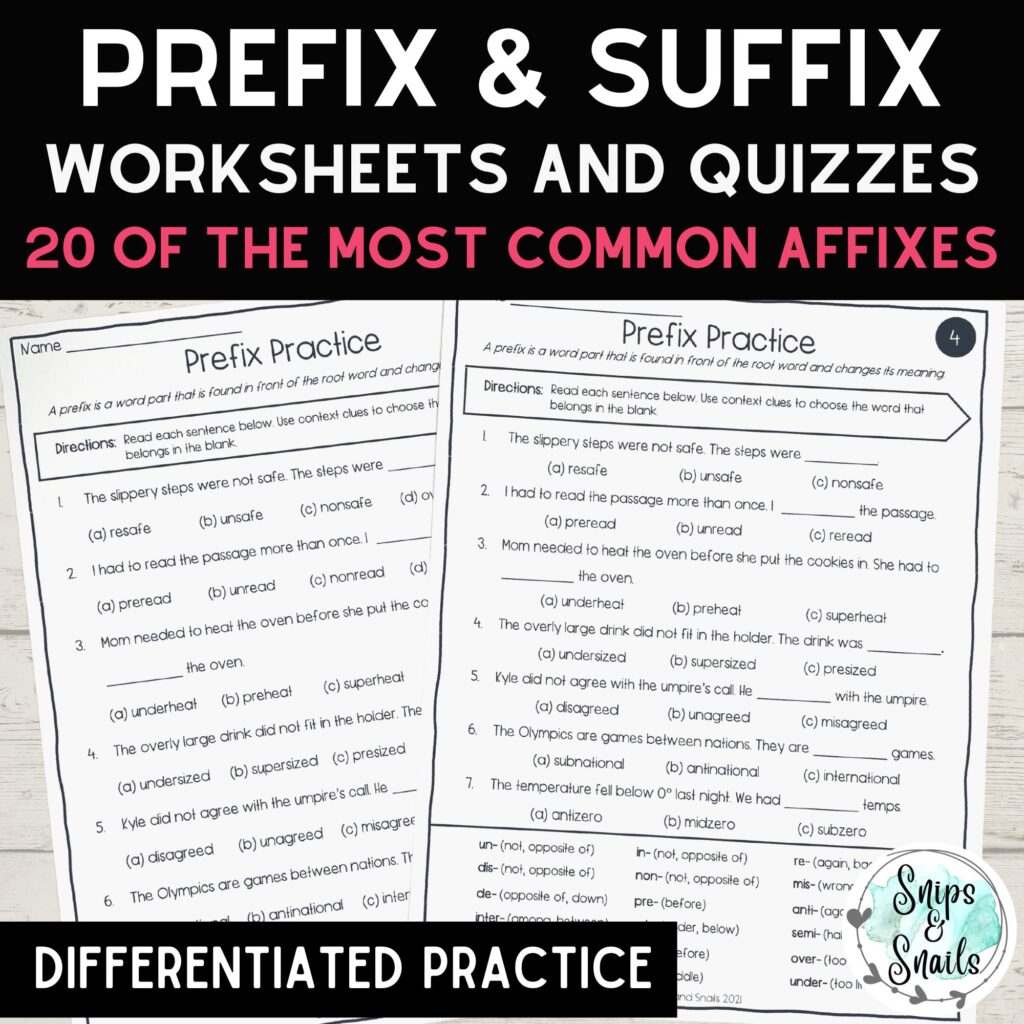
Mastering prefixes and suffixes can take time, so give students lots of opportunity for practice. Make review a regular part of your classroom activities.
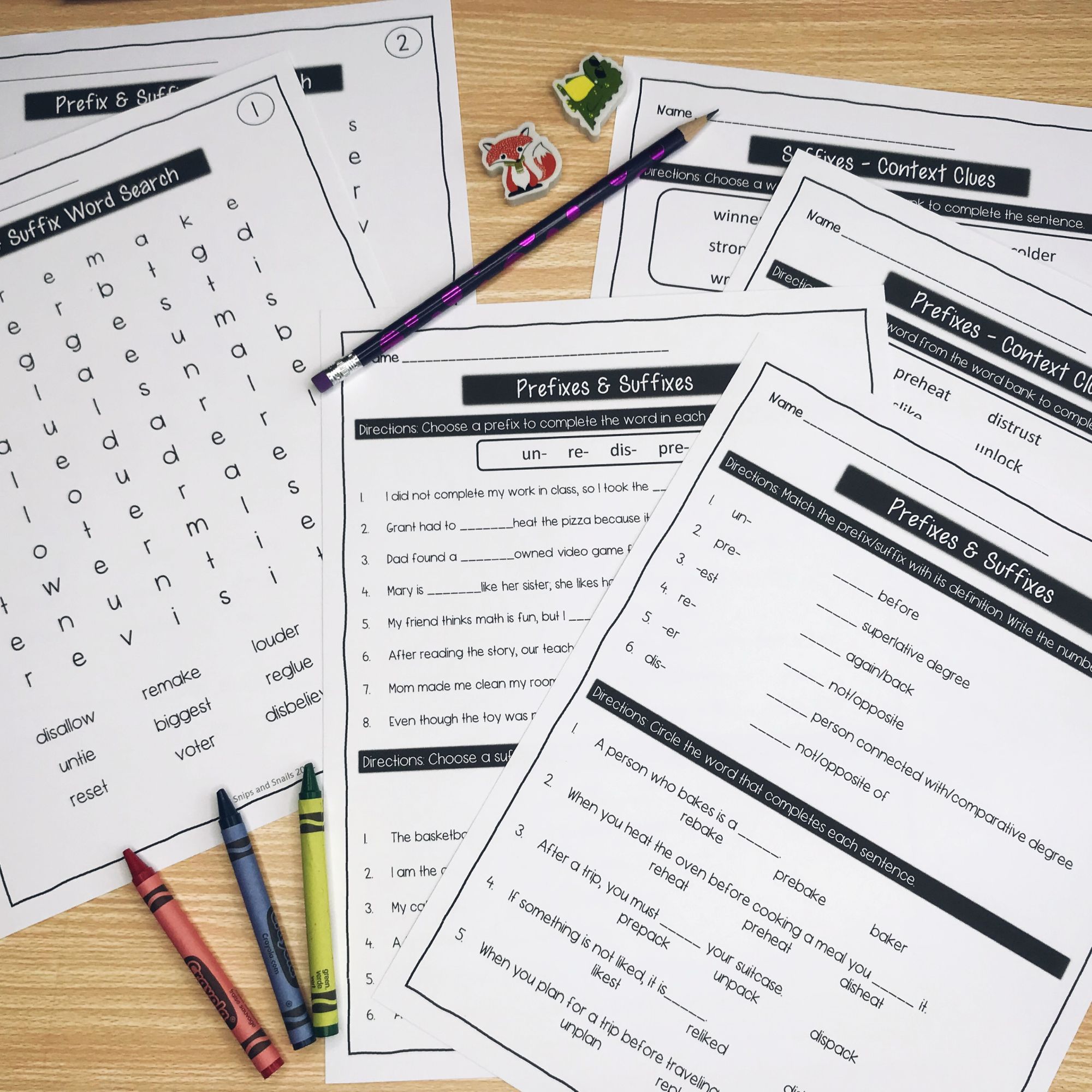
You can use prefix and suffix activities for:
- small group instruction
- literacy centers
- morning work
- homework review
Final Thoughts: Small Changes, Big Impact
Studying common prefixes and suffixes can have a huge impact on your students’ learning! You can help them become better readers, writers and spellers when you incorporate some of these activities into your classroom.
Ready to try these prefix and suffix activities in you classroom? Download the free starter kit today; no textbook required!
Save Time With These Ready-to-Go Resources
Related Topic:
- Looking for activities and ideas to help students improve their writing? Try this post on writing complex sentences!